Everyday Sense · A small routine for making your space easier to use.
You come into the room carrying something that needs a home. The table is covered. There’s a mug beside yesterday’s mail, a sweater over a chair, and a charging cable somewhere underneath it all.
Each thing looks manageable. Together, they make it difficult to decide where to begin.
Try choosing one small area and giving it ten minutes. The aim is simple: make an ordinary part of your day easier.
Choose the result before you start
“Clean the kitchen” could mean anything from washing a cup to reorganizing every cupboard. Give yourself a finish line you can recognize:
- Clear enough counter space to prepare breakfast.
- Make the dining table usable.
- Put the things you need tomorrow beside the door.
- Clear a comfortable place to sit.
Choose the result that would help you most today. Then set a timer, if a timer feels useful.
Minutes 1–2: Collect the obvious things
Start with decisions that require very little thought.
Put rubbish in the bin. Gather recycling. Take used dishes to the kitchen. Move laundry to its usual place.
Stay within your chosen area. If you walk a mug to the sink and discover a bigger job there, leave that job for another time. Return to the space you started.
You’re giving this particular corner your attention.
Minutes 3–5: Return what already has a home
Put the scissors back in their drawer. Hang up the jacket. Return the book to its shelf.
For objects that belong elsewhere, use a small basket or tray to gather them before making one trip. This can help you avoid wandering from room to room, starting a different task in each.
Some objects won’t have an obvious home. Set those together in one small, visible place for a later decision. Keep important papers together rather than throwing them away in a hurry.
This temporary collection needs a limit: one tray, one basket, or one small pile.
Minutes 6–8: Make the space usable
Now work toward the result you chose.
For a table, that might mean clearing one end and wiping it. For an entrance, it might mean lining up shoes and hanging the bag you’ll use tomorrow. For a chair, it might mean moving the laundry and folding the blanket.
Spend these minutes on what changes how the space works.
Straightening every book may be satisfying, but clearing the place where you eat breakfast might make a bigger difference tomorrow morning.
Minutes 9–10: Finish one helpful detail
Choose a small action that completes the reset:
- Put a fresh bag in the bin.
- Place your keys in their usual spot.
- Set out a clean mug.
- Plug in the device you need tomorrow.
- Put the gathered belongings back where they belong.
Then stop and look at what is easier to use.
If ten minutes is too much
Make the task smaller. Clear one chair. Put away three things. Gather only the dishes.
You can also work seated, bring a basket within reach, or ask another person to carry things. Adapt the routine to your energy and mobility.
There is no requirement to finish a room.
Notice what keeps coming back
If the same objects repeatedly collect in the same place, that gives you useful information.
Perhaps the shoe storage is too far from the door. Perhaps the mail needs a tray where you actually open it. Perhaps a charging cable belongs beside the chair where you use your phone.
Before buying another organizer, watch where the objects naturally land. A useful home for something is usually a place you can reach and remember.
For today, choose one spot. Ask yourself: What would make this space easier to use in the next twenty-four hours?
That is your starting point.
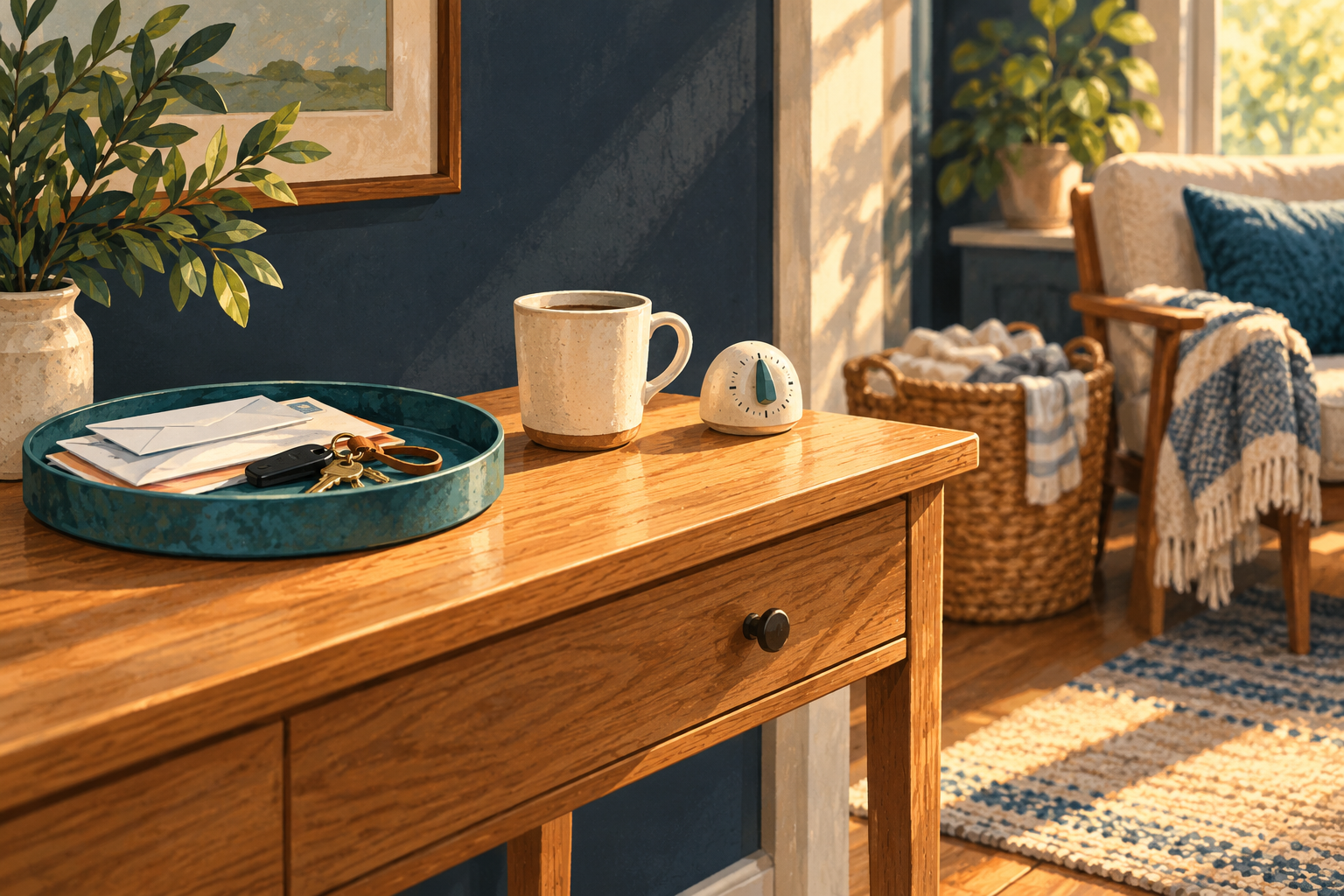
Cover illustration: AI-generated for MagniftySense.